
Also listen On


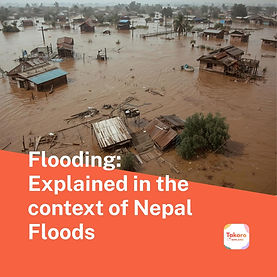
Episode 92: The Nepal Flood: When a Glacier Broke Loose
When a chunk of the Langtang Lirung glacier broke free in Nepal, it triggered a flood powerful enough to register as an earthquake. Kiran and Debkanya explain the geography, science, and climate change behind the disaster.
What You'll Learn
1. A single collapsing glacier in Nepal's Langtang National Park triggered a flood so powerful it initially registered as a 5.2-magnitude earthquake.
2. The Himalayan region is warming almost twice as fast as the rest of the planet, speeding up glacier melt and permafrost thaw.
3. A "debris flow" -- a fast-moving mix of ice, rock, and mud -- is different from an avalanche (snow collapsing) or a tsunami (an ocean wave).
4. The flood raced nearly 100 kilometers down the Trishuli and Lhende Khola rivers, destroying homes, bridges, roads, and power stations.
5. Nepal contributes very little to global emissions but is bearing some of the harshest effects of climate change, while the world's biggest emitters remain largely unaffected.
Key Vocabulary
- Glacier -- A massive, slow-moving river of ice formed from layers of snow frozen solid over thousands of years.
- Permafrost -- Ground that stays frozen solid all year round, sometimes for thousands of years.
- Debris flow -- A fast-moving avalanche of rock, ice, and mud racing down a mountainside.
- Avalanche -- A sudden, fast-moving collapse of snow or ice down a mountainside.
- Tsunami -- A huge ocean wave, usually triggered by an earthquake or a massive object entering the water.
- Richter scale -- The scale scientists use to measure the strength of an earthquake.
- Climate change -- The long-term warming of the Earth's atmosphere, caused mainly by human activity.
- Emissions -- Smoke and gases, like methane, released into the air that trap heat and warm the planet.
Classroom Lesson Plan
Discussion questions, a hands-on classroom activity, and grade-band standards alignment — grades 4–9.
Discussion questions
A -- Is It Fair?
Educator prompt: The episode points out that industrialized countries have historically produced most of the world's emissions, while Nepal has contributed almost nothing -- yet Nepal is suffering some of the harshest effects of climate change. Ask students: is it fair for a country to bear the consequences of a problem it didn't cause? What responsibilities, if any, do bigger, wealthier countries have toward smaller countries in situations like this?
B -- Same Ice, Different Names
Educator prompt: The episode explains that a wave of water in the ocean is a tsunami, a collapse of snow in the mountains is an avalanche, and what happened in Nepal was a debris flow. Ask students: why might scientists use different, precise names for events that can look similar from a distance? Does naming something correctly change how we prepare for or respond to it?
C -- Learning From the Ozone Layer
Educator prompt: The episode mentions that the hole in the ozone layer over Antarctica almost fully closed within about 20 years after the world acted together. Ask students: what made that success possible? Could a similar global effort work for climate change today, or are the two problems too different to compare?
D -- What Can Kids Actually Do?
Educator prompt: Debkanya lists small everyday actions -- using less plastic, wasting less water, walking or cycling more, ordering less delivery. Ask students: do small individual actions actually make a difference against a problem as large as climate change? What role does talking about these issues with friends and family play?
[00:00:00] Debkanya: Are you ready, Kiran?
[00:00:01] Kiran: I'm ready, Debbie. What about you?
[00:00:02] Debkanya: I am very ready. Let's go. Mics, camera, action
[00:00:10] Kiran: Today we're going up into the Himalayas. We're gonna be talking about floods, we're gonna be talking about geography, we're gonna be talking about science, and most importantly also climate change. We're hearing this more and more of late, but there is a reason for that. So make sure before we start this episode, you keep your map or your globe ready, because we're gonna be referencing a lot of different places. seconds to get this ready, so go for it
[00:00:42] Debkanya: And once you've got your map or your globe, remember, sit down, get ready to listen because something really huge and really important has just happened in a place in a country called Nepal
[00:00:55] Kiran: So most of you may have actually heard about this. On August 26th, there was a catastrophic flood that swept through Nepal it was just of such a big proportion that it was it was crazy. It was so surprising because it came all of a sudden. No one expected it. It wasn't a typical flood.
[00:01:18] Kiran: It wasn't, something that people expected. And so it also caused a lot of casualties, a lot of villages that were drowned out and, it was something that really got everyone's attention around the world.
[00:01:32] Debkanya: So many people have lost their lives, and a lot of people are still missing, so it's a very scary thing to happen. But before we go into what happened and why it happened, let's talk about where Nepal is. Find India
[00:01:45] Debkanya: and look at the top right of India, right? India has like a shoulder on both sides, right? It's sitting on top over there. It's a small country that is between China and India. It is home to the Himalayas, the beautiful, beautiful mountain range, Earth's tallest mountain range, and even home to Mount Everest, which is the tallest mountain in the world, which sits on Nepal's border with China.
[00:02:08] Debkanya: Now, you can see this place. If you have a map that shows you more details, Nepal is highly mountainous. It is-- It has many glaciers. Now, what is a glacier? A glacier is a really big, slow-moving river of ice, right? It's a block of ice. It's not just snow. It's layers and layers of ice that form a glacier that have been frozen solid over thousands of years.
[00:02:28] Debkanya: And when these melt, that's what gives us our rivers that flow down into India as well, right? So, for example, the Riva-river Ganga, which is one of the most important rivers for our country, comes from up in the mountains.
[00:02:43] Kiran: So what basically happened in Nepal was that this particular glacier, and it's basically the glacier that flows into two different rivers called Trishuli and Lhende Khola. Generally, rivers are a source of water for everyone living around it. Most civilizations, even in the past, used to base themselves around rivers because it's the fertile land, it has water, it's great place to be, right? Actually happened was in this Langtang National Park, there's a glacier called Langtang Lirung. A part of it actually collapsed, basically means it broke. And you've seen this in ice in your cup of water or drink. Ice melts and small pieces would possibly drop off. Same thing kinda happened, but now this is huge, right? It's not a cup of water. And that basically created a wave because every time you drop something, about it. Take a cup of water
[00:03:48] Kiran: Debbie? And drop a piece of ice into it, and you'll start seeing those ripples of waves floating away from that drop.
[00:03:56] Debkanya: Ja
[00:03:57] Kiran: Now, you take something which is hundreds and thousands of kilograms of weight and that drops into a massive lake, that same sort of wave gets transferred, and that is almost what
[00:04:11] Debkanya: That's right
[00:04:12] Kiran: kinda wave
[00:04:14] Debkanya: Yeah. And, and it's
[00:04:16] Debkanya: there's a specific term for it. Tsunami is what usually happens in the ocean, right? Where there's a huge wave of water. But what happens in the mountains when you're talking about snow and ice is it's called an avalanche, right? But in this case, basically what happened, this massive chunk of ice, it broke free, and it caused something very specific.
[00:04:34] Debkanya: It's called a debris flow, okay? Now, debris, basically, if you just take it for, for the, the word itself, it means lots of little chunks of stone and rock and mud and everything together, right? It's, it's, that's what debris is. So that's what this hap... What, what happened here is it caused a debris flow, which is basically an avalanche of rock, ice, and mud that raced down the mountainside at some crazy speeds, right?
[00:04:59] Debkanya: Really, really fast. And like you were saying, it's almost like a tsunami made of ice. That's what happened here. And this then followed nearly 100 kilometers along those rivers we mentioned earlier. These rivers are called the Trishuli River and the Lhende Khola River. This went slamming through these rivers, and it was so powerful, in fact, when this, this piece of this glacier fell, that it actually registered as an earthquake of 5.2.
[00:05:27] Debkanya: Remember we've told you about earthquakes?
[00:05:29] Kiran: fact,
[00:05:29] Debkanya: Yeah. So we measure them on the, on-
[00:05:31] Kiran: initial reports actually classified it as an earthquake that
[00:05:34] Kiran: caused this, which was actually
[00:05:36] Debkanya: Ja.
[00:05:36] Kiran: was actually
[00:05:37] Debkanya: Ja
[00:05:37] Kiran: falling which caused that sort of energy
[00:05:42] Debkanya: That's right. And I
[00:05:43] Debkanya: mean, we've told you about the Richter scale, right? The Richter scale is basically how we measure earthquakes. And normally, we had an earthquake recently, which was 7.2, 7.3. These are really, really massive earthquakes. This one was a 5.2 event, right? So it is pretty, pretty big by itself as well.
[00:06:00] Debkanya: But turned out it wasn't an earthquake at all. It's just that the earth shook when this entire thing happened. And the timing is also what some-- is something that, you know, made it worse than it should have been. We have monsoons going on in Nepal as well. The rivers were full of rain. Normally, you know, in other seasons, the river does not have as much rain, the glaciers do not melt as much, so water levels are lower.
[00:06:24] Debkanya: But this time, the water levels were really high because of the amount of rain. So this plus the ice, plus all that debris we spoke about, all that rock combined together, and it became like a huge flood that just destroyed many, many villages all along the Gurung border checkpoint. That is a checkpoint between Nepal and China.
[00:06:47] Debkanya: Homes were swept away, bridges were swept away, roads were destroyed, and even many, many hydroelectric power stations were destroyed
[00:06:56] Kiran: if we were to switch gears from, the geography to the science part of this, right? And if we were to just imagine there is a slope where there is a higher point and a lower point, and when water flows from top to bottom, gravity also plays a role, so things speed up. So it may start slowly from the top, but then as it keeps going down, and this is maybe an experiment you can try at school, at home when water starts flowing down for a longer period of time, it starts gaining speed. And when there is speed, it also starts gaining strength. And so I think when you combine all of that, just starts becoming such a big force that multiplies every few hundred, feet, hundred meters.
[00:07:43] Kiran: It just multiplies more and more, and the strength starts becoming more and more, right? Which is actually why you even have dams and things like that being built on water bodies. And then when you need electricity generated, the dams are opened, and you have water gushing out, right?
[00:07:59] Kiran: And that's also ways of generating electricity. So when you think about the science of it, is that ice block that falls into a cup of water, which is already full because it was raining. then when the water starts flowing further down, it just starts
[00:08:17] Kiran: gaining that much more speed and strength
[00:08:19] Debkanya: That's right.
[00:08:20] Debkanya: why did this happen?
[00:08:23] Debkanya: exactly what happened, but why did this happen? Why did this glacier collapse? And a lot of scientists and a lot of people who are experts and have been studying this for years are saying that climate change is the most likely cause. Now, climate change basically is that, you know the Earth is heating up.
[00:08:39] Debkanya: It is warming much faster than,
[00:08:42] Debkanya: ever before, and the Himalayan region in particular is warming nearly twice as fast, two times faster than the rest of the Earth, right? And what happens when some-- when you apply heat to ice? It starts melting, right? People have been studying glaciers, in fact, all across.
[00:09:00] Debkanya: I've seen, you know, reports from places like Norway as well, where people have gone back. You know, they visited a glacier you know, many years ago, 10 years ago, and then they've gone back to that same glacier, and it no longer exists. Nepal's glaciers are also losing ice at a very, very fast pace. Also, what is happening is there's something called permafrost, which you should understand.
[00:09:21] Debkanya: Maybe, you know, ask your-- ask someone to, you know, your teachers or your parents to show you what permafrost can look like. It's frozen ground. Because in these places it's cold all year round. They don't have, like, they have a summer, but it's cold enough for the ground to be frozen for thousands and thousands of years.
[00:09:36] Debkanya: That is also melting, and when that starts melting, that starts shifting and moving, right? Like we said, anything that's ice starts melting, it starts becoming loose. And less and less snowfall is falling, which means it's no longer getting cool the way it used to before. All of these things combined is what, you know, scientists say has led to this event
[00:09:58] Kiran: the system as we knew it, right? And, climate change is not new. we've actually talked about climate change for quite some time, on multiple episodes. But even from a timeline perspective, climate change is not new. It is what has always caused different civilizations, different eras in our history of the Earth to cause a lot of big changes. And so that's what we are dealing with because we're not used to these kind of things. In fact, we've talked about El Nino. We're expecting one of the warmest, hottest periods ever to have been recorded to happen over the next 12 to 18 months. And so a lot of that kind of has repercussions, not just where it's heating up, but for example, in Nepal, where there is ice and snow and you're not thinking about heat, but actually the heat is playing a role even over there, right? And I think that's probably the unfair reality for people living in Nepal and in fact, I was discussing this other people, and someone brought a point saying it seems the, the
[00:11:02] Kiran: climate change is affecting countries which are not even maybe responsible for it. So the Western countries who have basically built their entire, world around industrialization, who have contributed a lot towards the climate change, but then you have a small little Nepal who's borne the brunt of it, right? So that's
[00:11:24] Debkanya: Yeah.
[00:11:25] Kiran: part
[00:11:26] Debkanya: In fact, what causes climate change? What causes the world to become warmer?
[00:11:32] Debkanya: It's a lot of emissions. Emissions basically means smoke, all the, all the chemicals that we release into the air methane that goes into the air, which is a type of gas. All of these things are making the air and the atmosphere warmer and warmer and warmer, right?
[00:11:46] Debkanya: We're holding onto the sun and the heat that the sun gives us. That's what is causing climate change. And so these bigger countries have already done this. Tiny countries like Nepal, no contribution almost to cl- to, you know, warming up the world, and yet look at what's happened. Just because they happen to be placed in a very, very beautiful but, you know, vulnerable location, they've had to face this, and lots of people have lost their lives.
[00:12:13] Debkanya: And it's-- that's why people are saying it's really not fair. It's like, you know, somebody else created the conditions, and you have to deal with the,
[00:12:22] Kiran: Yeah.
[00:12:23] Debkanya: the fire that's been set in your home, right?
[00:12:26] Kiran: there is something
[00:12:27] Debkanya: and, and this matters a lot.
[00:12:28] Kiran: we can all
[00:12:29] Debkanya: Hmm
[00:12:29] Kiran: because, again, I think there are big learnings of how we can always contribute more. And one of the most amazing stories I think is about that ozone layer and how in the '60s or '70s we had identified that there's a massive hole that's forming above Antarctica which
[00:12:48] Kiran: kind of opens up the ozone layer. And then, maybe we can do another episode around it, but we as humans,
[00:12:55] Debkanya: That's a very cool story. we should definitely talk about that
[00:12:58] Kiran: actually did something together to ensure that we were not doing it anymore. And within 20 years, that
[00:13:06] Debkanya: Yeah
[00:13:06] Kiran: has actually closed up almost, right? And we're no longer-- It's no longer a threat, which is insane.
[00:13:12] Kiran: And go read that story up. Maybe we'll do an episode about it as well, which is very,
[00:13:15] Kiran: cool. But there is hope, so we can do our part. So what are the things that we potentially could do, Debbie?
[00:13:23] Debkanya: Well, for one, we have to keep talking about it. I think that is one of the things that you cannot stop doing. And even, you know, no matter how old you are, whether you're eight years old, whether you're 15 years old, whether you're 40 years old, we all need to have conversations around why these things are happening, what is possible.
[00:13:41] Debkanya: We need to understand this, this, you know, this story and maybe make some changes in our day-to-day behaviors, not just individually, but maybe as a country, as a community, as a group, as a larger group. You know, it could be simple things like using less plastic or wasting less water or, you know, making better choices in terms of, you know, the kind of food we eat.
[00:14:03] Debkanya: There's a lot of different things, maybe, you know, taking public transport, using cycles walking more rather than taking your car out for every single trip, ordering a little less from you know, Blinkit or Swiggy.
[00:14:16] Kiran: Yeah.
[00:14:16] Debkanya: You know, all of these things matter. Basically, reduce the amount you consume, reduce the amount of pressure you're putting on the systems around you, and this is going to happen by talking to friends and family and encouraging each other and supporting each other to do the right things.
[00:14:30] Kiran: cool. It's cool to be eco-friendly. So think of it that way as well. And it's not just about you being a kid or like Devi said, teenager or a young adult or an old adult.
[00:14:42] Kiran: I think all of us have a lot that we can do individually
[00:14:46] Debkanya: So yes, on that note, remember, our planet is all interconnected today. This is something that happened in Nepal for no fault of theirs. Tomorrow, something else can happen somewhere else. It's not something that you should be worrying about too much, but it should be something that we all talk about and come together to figure out solutions to,
[00:15:06] Kiran: about
[00:15:06] Debkanya: right?
[00:15:06] Debkanya: The planet is interconnected, and we are all connected.
[00:15:09] Kiran: and eventually
[00:15:10] Debkanya: Yeah
[00:15:10] Kiran: that connection kind of boils down to that. So think about how you're about each of these subjects as well. But, before we go, I think there is one section that
[00:15:22] Kiran: we have not yet covered, and that is the quiz question of this week. So
[00:15:30] Debkanya: That's right.
[00:15:30] Debkanya: Drum rolls, please. My favorite section of every Takaro Explains episode, the quiz question this week. If you've been listening carefully, you will know the answer, so get ready. What is the name of the permanently frozen ground that is thawing, thawing means melting, due to warming? I will give you options.
[00:15:55] Debkanya: Is it option one, glaciers; option two, boulders; option three, snow; or option four, permafrost. The question again: What is the name of the permanently frozen ground that is thawing or melting due to warming?
[00:16:15] Kiran: So as always, send us your answers to our website or head on over to Instagram and ask someone to send us a direct message if you don't have access to it.
[00:16:29] Debkanya: In fact, this time,
[00:16:31] Debkanya: what we would like you to do is send us a voice note, right? We'd love to feature you on the next episode of Takaro Explains. So send us a voice note with the correct answer, and you might just hear yourself on the next episode
[00:16:44] Kiran: that is a very cool idea, Debbie. And in fact, yes, your
[00:16:49] Debkanya: Thank you
[00:16:50] Kiran: if it's the right one, will actually potentially be
[00:16:53] Kiran: featured to thousands and thousands of people everywhere. So that's pretty cool. So make sure you get your
[00:17:01] Debkanya: That is very cool.
[00:17:02] Kiran: entries in
[00:17:03] Kiran: as soon as possible, and until next week it is bye-bye
[00:17:09] Debkanya: Goodbye